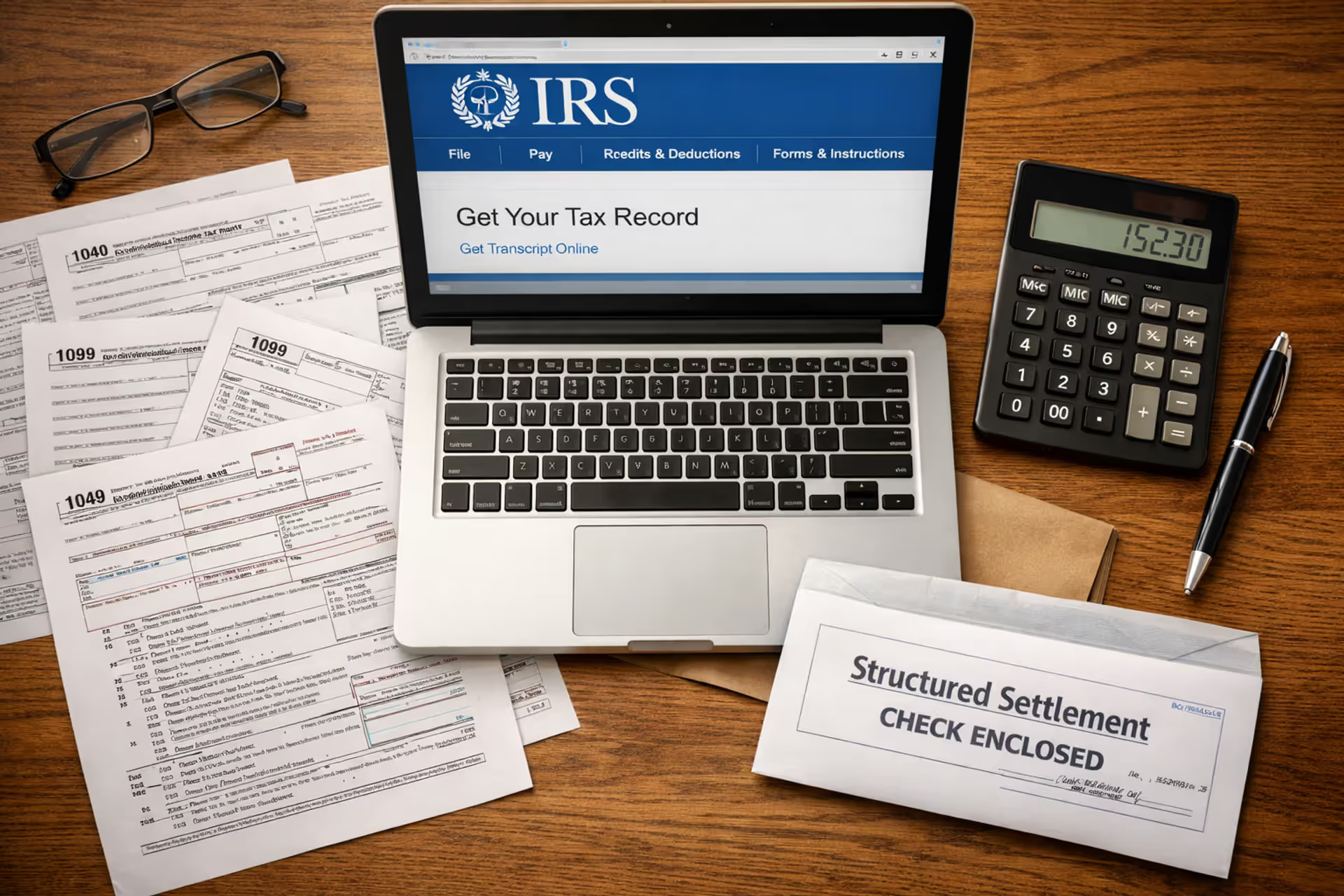
Legal documents, calculator, and IRS envelope on a wooden desk with scales of justice in the background, representing structured settlement tax analysis
Are Structured Settlement Payments Taxable

Content
If you've settled a personal injury lawsuit, here's good news: you probably won't owe the IRS a penny. Settlements tied to physical harm get special protection under federal tax law. But that protection vanishes fast if your case involves workplace issues, if you're claiming only emotional damages, or if you cash out your payment stream early.
The tax status of your settlement hinges on three things: what caused your injury, what your legal documents actually say, and whether you keep receiving payments as scheduled. Sometimes a poorly worded clause can cost you tens of thousands in unnecessary taxes.
How the IRS Treats Structured Settlement Payments
Section 104(a)(2) of the Internal Revenue Code serves as the foundation for settlement taxation. According to this statute, you can exclude certain damages from your taxable income—specifically those received for bodily harm or diagnosed illness, regardless of whether you get paid all at once or over time. Punitive awards don't qualify.
Here's what matters most: the words "personal physical injuries or physical sickness." The IRS added "physical" to this section back in 1996. Before that change, people settling emotional distress claims enjoyed the same tax benefits as accident victims. That door closed nearly three decades ago. Today, unless medical records document actual bodily injury or illness, you're looking at a tax bill.
When settlement money compensates your hospital stays, replaces income you couldn't earn because of injuries, or pays for your pain after an accident, Section 104(a)(2) keeps it tax-free. The law recognizes you're being made whole, not getting ahead.
But punitive awards work differently. Courts sometimes add these to punish especially reckless behavior. Even if a drunk driver left you with permanent disabilities, the portion of your settlement labeled as punishment gets taxed at ordinary rates. Interest that accumulates on any settlement proceeds also creates taxable income.
One more distinction: money received versus money earned. Let's say you break your leg at work and your boss continues your regular paycheck during recovery. Those paychecks remain taxable even though they're connected to your injury. The tax exemption covers compensation paid because of bodily harm, not your usual earnings that happen to continue while you heal.

Author: Andrew Halvorsen;
Source: avayabcm.com
When Structured Settlements Remain Tax-Free
Personal Injury and Physical Sickness Cases
Auto collision settlements, malpractice payouts, premises liability cases, and product defect claims all produce tax-exempt structured payments. Each check arrives without federal tax withholding, whether payments come monthly, yearly, or on any other schedule.
Don't assume "physical injury" means something dramatic. You won't need X-rays showing fractures or photographs of lacerations. Documented conditions from chemical exposure qualify. Repetitive motion injuries backed by medical evaluations count. Even physical symptoms that develop after trauma can meet the threshold.
Consider a delivery driver whose herniated disc stems from years of lifting packages off a truck. His premises liability settlement creates tax-free payments. A patient who develops chronic tremors after a botched spinal surgery? Her malpractice settlement payments avoid taxation. Someone hit by a texting driver who negotiates ongoing payments for traumatic brain injury treatment? Every dollar stays with them.
Your settlement paperwork needs to explicitly connect payments to bodily harm. Vague phrasing invites IRS scrutiny. When documents say you're being paid "for all claims" without identifying physical injuries, the government might argue you owe taxes. Skilled personal injury lawyers draft agreements with language that specifically references the physical conditions being compensated.

Author: Andrew Halvorsen;
Source: avayabcm.com
Wrongful Death Claims
When family members receive structured payments after someone dies from negligent or intentional acts, those payments mirror the tax treatment of injury settlements. The deceased person suffered bodily harm, and their survivors receive compensation for that loss.
A widow getting monthly income after her husband's fatal construction site accident won't face federal taxation on those amounts. Kids receiving structured payments through age 25 after losing a parent to a surgical error won't see withholding. Tax exemption covers all compensatory portions of wrongful death cases, though punishment-focused damages stay taxable.
Some wrongful death agreements split compensation between the survivors' losses and what the deceased endured before dying. Both categories typically avoid taxation under Section 104(a)(2), assuming proper documentation categorizes them correctly.
Common Situations That Trigger Taxation on Settlement Payments
Employment Discrimination and Emotional Distress
Employment cases generate more tax confusion than any other settlement type. Resolve an age bias claim, racial harassment case, sex discrimination lawsuit, or illegal firing? Your structured payments typically get taxed as regular income.
The 1996 law change eliminated exemptions for emotional distress damages unless they accompany physical injury or sickness. An employee who develops documented medical problems—bleeding ulcers requiring treatment, hypertension controlled by prescription drugs, disabling migraines with neurologist visits—might qualify for partial exemption on settlement amounts tied to those conditions.
You'll face a steep evidentiary burden. Documentation needs to include clinical records establishing physical symptoms, ongoing treatment notes, and clear medical opinions linking workplace events to your physical condition. Even with perfect records, only settlement portions allocated to bodily illness escape taxation.
Settling a $500,000 age discrimination claim? Every payment generates reportable income. Your former employer will probably send Form 1099-MISC or include amounts on a W-2, triggering federal income tax plus Social Security and Medicare withholding. Many workers feel blindsided when their actual proceeds run 25-40% below expectations after tax obligations.

Author: Andrew Halvorsen;
Source: avayabcm.com
Punitive Damages and Interest Income
Legitimate injury cases can still include taxable components through punitive awards and interest charges. Imagine your $1 million settlement breaks down as $800,000 compensating your injuries and $200,000 punishing the defendant's gross negligence. You'll owe tax on that $200,000.
Settlement agreements should itemize compensatory versus punitive amounts separately. Lumping everything together without distinction creates audit risk. Some jurisdictions prohibit punitive awards in certain case types, which actually simplifies tax analysis.
Pre-judgment interest (before the case settles) and post-judgment interest (after a verdict) both create taxable ordinary income. If your case dragged on for four years and the final agreement includes $50,000 in accumulated interest, that portion generates tax liability regardless of the underlying injury claim.
Selling Your Structured Settlement
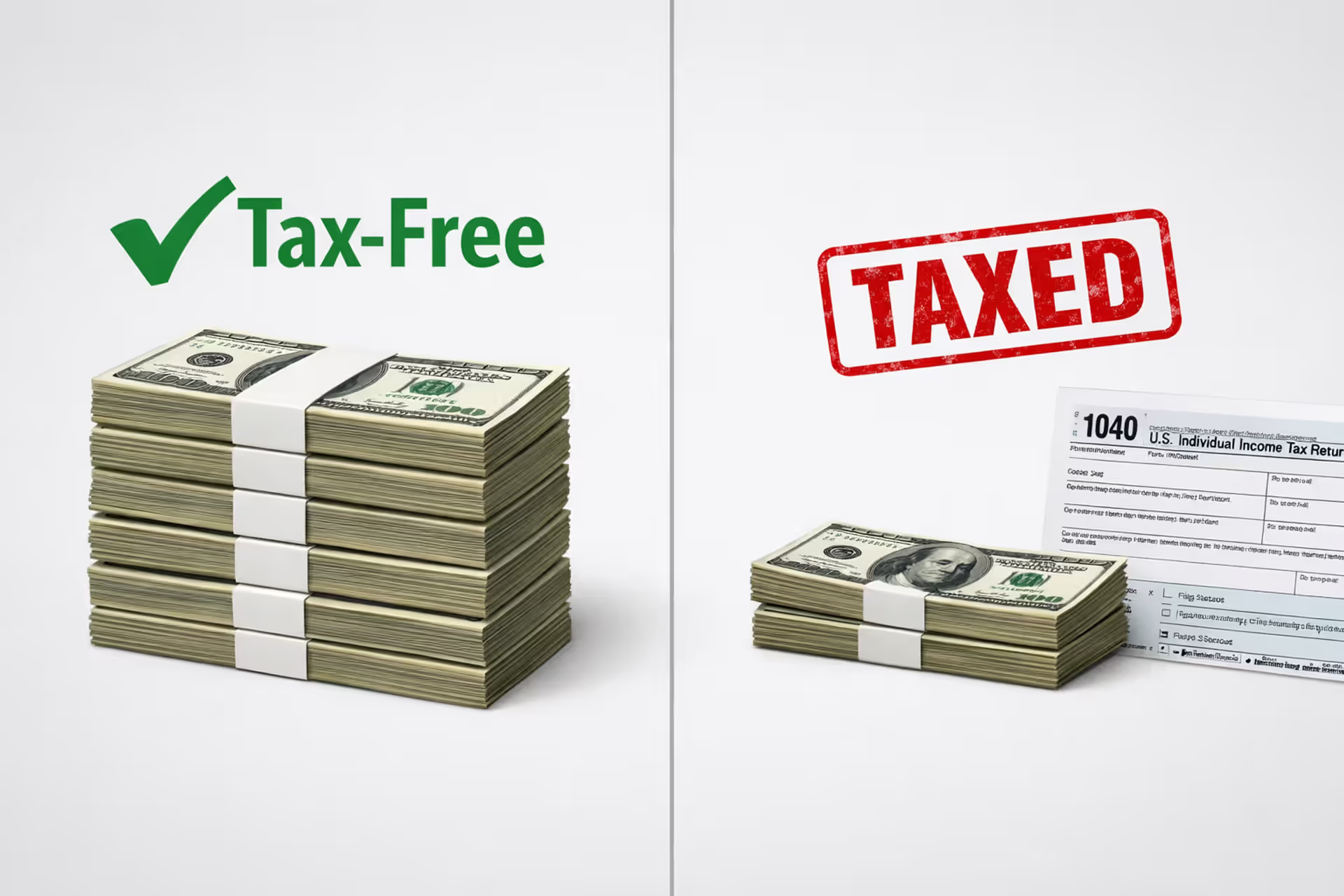
Factoring companies will buy your future payment rights for an immediate lump sum—but this transaction destroys the tax-free character of your settlement. This ranks among the most misunderstood tax traps in the settlement world.
When you sell, you're trading away your right to receive future tax-exempt amounts in exchange for discounted cash today. The IRS views this as generating taxable income equal to the lump sum you pocket (your basis in the payment stream is usually zero).
Someone with $200,000 remaining in tax-free auto accident payments who accepts $120,000 from a factoring company faces taxation on the full $120,000. The original tax exemption doesn't transfer with the sale. Depending on transaction structure, you might owe capital gains rates or ordinary income rates.
State laws require court approval before sales can proceed, but judges focus on consumer protection, not tax consequences. Courts verify the transaction serves your interests; they won't calculate your tax bill. Many people sell during financial crises without realizing they're converting tax-free future income into taxable current income that gets reduced again by taxes.

Author: Andrew Halvorsen;
Source: avayabcm.com
State Tax Treatment of Structured Settlement Annuities
Most states mirror federal rules for settlement taxation. Payments that qualify as tax-exempt under IRC Section 104(a)(2) also escape state income tax in the overwhelming majority of jurisdictions.
Eight states impose zero individual income tax: Alaska, Florida, Nevada, South Dakota, Texas, Washington, and Wyoming. Tennessee eliminated its income tax on investment returns in 2021. New Hampshire only taxes dividends and interest above certain thresholds, leaving structured settlements untouched. Living in any of these states eliminates state tax concerns entirely.
States with income tax generally adopt federal standards, meaning injury-based structured settlements remain tax-free while employment settlements face taxation. A few states maintain unique provisions or offer additional exemptions for specific settlement categories.
California explicitly follows federal treatment for structured settlements. New York conforms to IRC Section 104(a)(2). Pennsylvania exempts most personal injury proceeds but applies specific rules to interest and investment earnings.
Receiving payments while living in one state, then relocating? Your tax treatment typically depends on where you live when each payment arrives, not where you resided at settlement. Someone who settles a malpractice claim in New Jersey, then retires to Florida, stops owing state income tax on payments after moving (though the payments were already federally tax-exempt).

Author: Andrew Halvorsen;
Source: avayabcm.com
How to Verify Your Settlement's Tax Status
Pull out your settlement agreement and release paperwork. Search for explicit language describing your claim's nature and the damages being paid. Phrases like "compensation for bodily injuries sustained," "payment on account of physical harm," or "settlement of claims for diagnosed physical illness" signal tax-free treatment under Section 104(a)(2).
Warning signs include broad terms like "settlement of all claims," "payment for emotional distress," "compensation for lost income" without mentioning physical injury, or "resolution of employment-related disputes." These suggest taxable treatment or at least uncertainty requiring expert analysis.
Check whether your agreement separately breaks out punitive damages, interest charges, or other taxable elements. Even in injury cases, these components should appear as distinct line items since they face different tax rules.
If you're still negotiating before signing anything, insist your attorney incorporate clear tax-characterization language. Courts typically respect how parties categorize damages in arm's-length agreements, provided the characterization matches case facts reasonably.
Bring in a tax professional experienced with personal injury settlements before accepting any structured offer. CPAs or tax attorneys can review proposed agreements, flag tax problems, and sometimes suggest alternative wording that preserves exemptions. Spending a few hundred dollars for this review looks trivial compared to the tax savings across decades of payments.
For settlements already finalized, request documentation of your qualified assignment if one exists. In properly structured tax-free settlements, defendants assign their payment obligations to specialized assignment companies that purchase annuities from highly-rated life insurers. The assignment company takes over making your payments. This structure, when correctly documented, reinforces tax-free status.
Tax Reporting Requirements and Documentation
Settlement agreement wording matters more than any other factor in determining taxation. I've watched clients forfeit tax-free status on settlements exceeding six figures because their lawyers used imprecise language failing to clearly tie payments to bodily injuries. The IRS examines that document before anything else, so accuracy at the settlement phase proves critical. Attempting to fix characterization problems later is essentially impossible
— Thomas Bender
The IRS doesn't require payers to issue Form 1099 for tax-exempt structured settlement payments from physical injury cases. When your settlement qualifies under Section 104(a)(2), you typically receive zero tax reporting forms, and you don't list the payments anywhere on your return.
This absence of paperwork confuses some recipients who expect documentation for all income streams. Actually, the lack of a 1099 indicates positive news—the payer recognizes your settlement as tax-exempt.
Taxable settlements trigger Form 1099-MISC (box 3 for non-business amounts) or possibly W-2s when settlements resolve employment claims characterized as wages. Report these amounts on Schedule 1 of your return as "other income," or treat as wages if you got a W-2.
Maintain comprehensive records even when settlements are tax-free. Store copies of settlement agreements, release documents, qualified assignment paperwork, and all correspondence with insurers or assignment companies making payments. Should the IRS question your tax treatment during an audit of unrelated matters, you'll need documentation proving your payments qualify for exemption.
Document medical treatment and physical injuries thoroughly. Medical charts, physician notes, hospital invoices, and treatment summaries all reinforce the bodily injury foundation for your tax-free settlement. Retain these records at least seven years past your final structured payment, longer if feasible.
For settlements mixing taxable and non-taxable components, keep detailed records showing allocation methodology. When $80,000 of your settlement compensates physical injuries while $20,000 represents punitive damages, document this breakdown and report only the $20,000 as taxable.
Tax Treatment of Different Settlement Types
| Settlement Category | Federal Tax Treatment | Relevant IRC Section | Critical Factors |
| Auto accidents, slip-and-fall, medical malpractice | Exempt from taxation | IRC § 104(a)(2) | Requires documented bodily harm or diagnosed illness; legal documents must explicitly reference physical injury foundation |
| Emotional distress claims lacking physical component | Subject to taxation | No exclusion applies | Treated as ordinary income unless documented physical symptoms receive medical treatment |
| Workplace discrimination based on age, race, sex, or wrongful termination | Subject to taxation | No exclusion applies | Completely taxable; typically reported via W-2 or 1099; subject to both income tax and payroll taxes |
| Punitive damage awards | Subject to taxation | IRC § 104(a)(2) explicitly excludes | Taxable even when underlying case involves physical injury; requires separate identification in settlement paperwork |
| Wrongful death actions | Exempt from taxation | IRC § 104(a)(2) | Compensatory payments to survivors avoid taxation; punitive elements remain taxable |
Frequently Asked Questions About Structured Settlement Taxation
Determining whether your structured settlement payments face taxation requires analyzing your claim type, reviewing settlement agreement language, and understanding how you handle the payments. Physical injury and wrongful death settlements stay tax-free under federal law, delivering substantial value across the payment timeline. Employment disputes, emotional distress lacking physical symptoms, and punitive damages create tax obligations even when paid through structured arrangements.
The costliest errors occur when settlement agreements use imprecise language failing to clearly establish the bodily injury basis for payments, or when recipients sell future tax-free payments without grasping tax implications. Before finalizing any structured settlement, hire professional tax advisors to verify your agreement preserves optimal tax treatment. Tax savings accumulated over 20 or 30 years of payments can easily surpass six figures for substantial settlements.