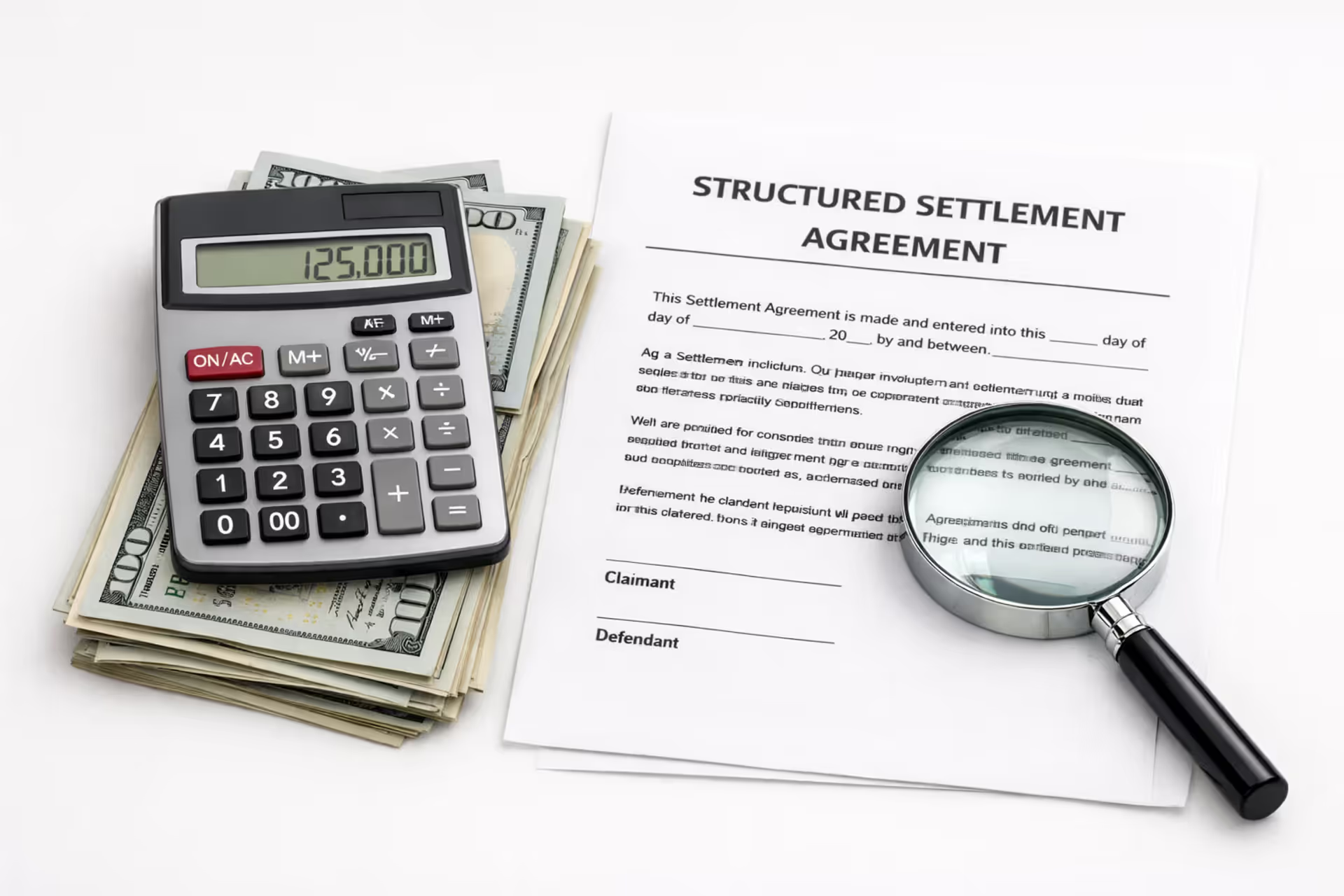
Top-down view of a desk with an open envelope containing a payment check, calculator, pen, payment schedule documents and a calendar, clean blue-white color scheme
What Is a Structured Settlement and How Tax Free Payments Work

Content
When you win or settle a lawsuit, you face a crucial financial decision: take all your money now, or spread it out over months, years, or even your lifetime? That's where structured settlements come in—agreements that convert your legal award into scheduled payments instead of one big check.
Picture this: instead of receiving $500,000 today, you might get $3,000 every month for the next 20 years, plus a $25,000 bonus payment every December to cover holiday expenses. The money comes from an annuity that the defendant's insurance company buys specifically for you.
This payment approach started gaining traction in the late 1970s. Insurers and courts kept seeing the same heartbreaking pattern—accident victims would receive massive settlements, then blow through the money within two or three years. Someone paralyzed in a construction accident might pocket $2 million, buy a fancy house and cars, get targeted by unscrupulous "friends" and advisors, then end up broke while still facing decades of medical expenses.
The federal government sweetened the deal considerably. Payments from physical injury settlements don't get taxed—not the principal, not the interest that builds up inside the annuity, nothing. Compare that to your paycheck or investment dividends, which the IRS definitely wants a piece of. This tax benefit alone can mean hundreds of thousands of extra dollars in your pocket over time.
Combined with protection from creditors and the security of guaranteed payments, these arrangements have become standard practice in personal injury cases. Let's dig into how they actually work.
How Structured Settlements Work in Personal Injury and Legal Cases
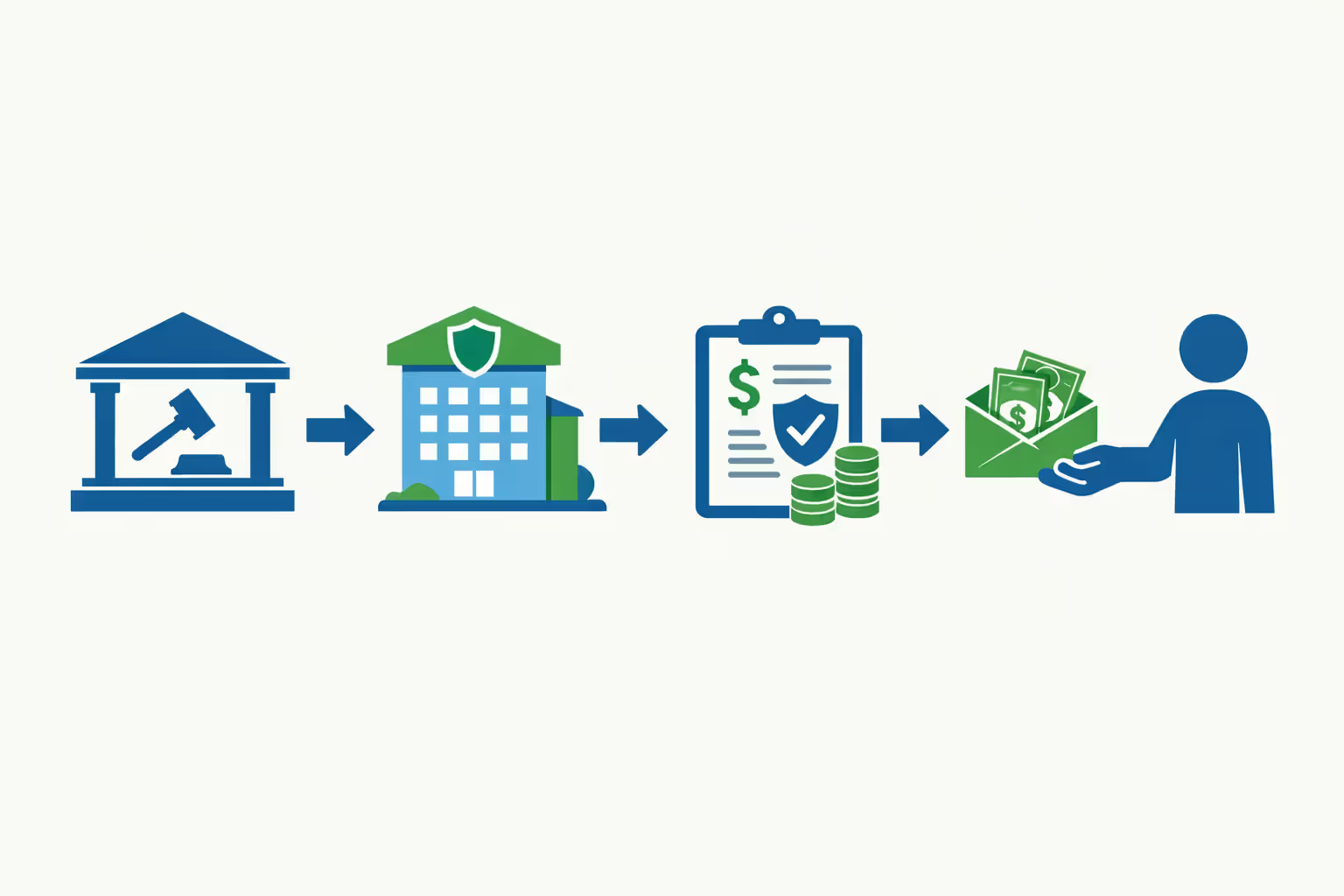
After your attorney negotiates a settlement or a jury awards damages, the defendant's insurance company doesn't just write you a check and call it a day. Instead, they transfer the money to a qualified assignment company, which purchases an annuity contract from a life insurance carrier. That insurance company becomes responsible for sending you payments according to the schedule everyone agreed on.
You get tremendous flexibility in designing your payment plan during negotiations. Maybe you want $2,500 every month to replace lost wages. Perhaps you'd prefer quarterly payments of $7,500. Some people build in annual lump sums to coincide with property tax bills or college tuition deadlines.
Here's a real-world scenario: A warehouse worker loses three fingers in a machinery accident. After 18 months of litigation, the equipment manufacturer's insurer agrees to pay $850,000. The worker's attorney helps him structure the settlement this way:
- $200,000 immediately to cover legal fees, pay off medical bills, and establish savings
- $3,200 monthly for life, starting next month
- Additional $30,000 payment every five years to cover vehicle replacements and home maintenance
- $15,000 annual payment each January for healthcare premiums
The remaining $650,000 gets structured, and an insurance company issues the annuity. The worker never has to worry about investing wisely or managing a large sum—checks just show up like clockwork.
Author: Olivia Carmichael;
Source: avayabcm.com
The Role of Annuities in Structured Settlements
Think of the annuity as the engine making everything run. Unlike your 401(k) or brokerage account where values bounce around with the stock market, these annuities promise fixed payments backed by the insurance company's financial reserves.
These aren't the annuities your financial advisor might recommend for retirement planning. They're structured settlement annuities—a specialized product with unique characteristics. The assignment company actually owns the annuity, not you. You own the right to receive payments, but you can't cash it out, borrow against it, or change the terms. This ownership structure creates your tax-free status under IRS rules.
Insurance company strength matters enormously here. Your attorney and settlement consultant should insist on carriers rated A- or higher by A.M. Best, Standard & Poor's, or Moody's. Companies like MetLife, Pacific Life, and New York Life dominate this market because of their financial stability.
What if the insurance company fails? State guaranty associations step in, typically covering up to $250,000 in present value (some states offer higher protection). In the 40+ years these arrangements have been common, structured settlement annuity defaults remain exceptionally rare—far safer than most investments.
This structured settlement annuity explanation guide helps clarify why people sometimes confuse these with retirement annuities or lottery payment plans, which work quite differently and don't offer the same tax benefits.

Author: Olivia Carmichael;
Source: avayabcm.com
Who Receives Structured Settlement Payments?
Personal injury victims make up about 70% of structured settlement recipients, but the arrangements extend well beyond car accident and slip-and-fall cases.
Families who've lost someone to wrongful death often structure settlements to replace the deceased person's income over time. A mother whose husband died from a defective product might structure payments to cover household expenses until her children finish college, then reduce to supplement her own retirement income.
Medical malpractice awards frequently get structured because victims face ongoing treatment costs for years. A botched surgery might require multiple corrective procedures, physical therapy, and pain management—expenses that structured payments can fund indefinitely.
Workers' compensation cases sometimes involve structures for permanent disabilities. An electrician who suffers brain damage from electrocution might receive payments for life since he'll never work again.
Courts almost always require structured payments for minors. A seven-year-old injured in a school bus accident can't receive $600,000 in cash—she'd have no legal way to manage it. Instead, the settlement gets structured to provide college funding at age 18, then monthly income starting at age 21. This structured settlement basics explanation guide approach protects kids from their own inexperience and from adults who might take advantage.
Lottery winners and casino jackpots also involve periodic payments, but those are fully taxable and work under different rules. Employment settlements can sometimes be partially structured, though tax treatment gets complicated fast depending whether damages compensate for physical harm or just emotional distress.
Structured Settlement vs. Lump Sum Payment: Which Option Makes Financial Sense?
Should you take the money and run, or set up guaranteed payments? There's no universal answer—your situation determines the right choice.
| Factor | Periodic Payment Structure | Single Cash Payment |
| Tax obligations | Zero taxes on qualified physical injury cases | No initial tax, but earnings from investing get taxed |
| How you receive money | Guaranteed amounts arriving on set dates | Full amount available immediately |
| Market exposure | No investment risk whatsoever | You bear all market fluctuation risk |
| Protection from creditors | Substantial protection in most jurisdictions | Available to creditors and legal judgments |
| Ability to adapt | Terms are locked—no changes possible | Total control over spending and investing |
| Ideal candidates | People needing reliable income, those with limited financial experience, long-term medical needs | Savvy investors, people facing foreclosure, genuine business opportunities |
Most settlement advisors suggest a split approach based on this structured settlement overview financial guide: grab enough cash to knock out high-interest credit cards, settle immediate medical bills, and build a proper emergency fund with 6-8 months of expenses. Then convert everything else into structured payments for lasting security.
Consider a 42-year-old settling a $950,000 car crash case. If she takes the full amount and manages a 6% average return in mutual funds, she'd generate about $57,000 yearly—but that income swings with market crashes and boom times, plus she owes taxes on gains. A structured settlement delivering $57,000 annually stays constant through recessions and requires zero tax payments, effectively matching $70,000-$75,000 in taxable income for someone in the 24% federal bracket.
Sometimes the lump sum makes perfect sense. Your house faces foreclosure next month? You need that cash now. Your brother-in-law wants you to invest in his "guaranteed" cryptocurrency scheme? Maybe the structure protects you from bad decisions. You've been diagnosed with terminal cancer and given 18 months to live? The lump sum lets you use your settlement while you're still here, since most structures stop paying when you die (unless you specifically negotiate survivor benefits).
Tax Advantages and Legal Protections of Structured Settlements
The tax exemption might be the single most powerful wealth-building provision in the entire tax code for injury victims. Someone collecting $4,000 monthly for 25 years receives $1.2 million without owing a dime to Uncle Sam.
IRS Tax-Free Status Under Section 104(a)(2)
The relevant tax law—Internal Revenue Code Section 104(a)(2)—says the IRS can't touch "damages received (other than punitive damages) on account of personal physical injuries or physical sickness." This structured settlement introduction guide to taxation shows how the exemption covers not just your original settlement amount but also all the interest that accumulates inside the annuity over the years.
The physical injury requirement is crucial. Break your back in a car wreck? Tax-free. Get diagnosed with cancer from chemical exposure at work? Tax-free. But get fired illegally and win an employment discrimination case? Taxable. Win a defamation lawsuit because your neighbor spread lies? Taxable. Settle a breach of contract dispute? Taxable.
The IRS draws another important distinction: emotional distress damages only qualify as tax-free if they directly result from physical injuries. You can't claim tax-free status for depression alone, but depression stemming from your traumatic brain injury gets the same exemption as the injury itself.
The tax-free growth inside structured settlements creates wealth impossible to match with taxable investments.My client in the 24% federal tax bracket would need to earn roughly 7.9% annually after fees in a taxable account to match a 6% structured settlement—and she'd have zero guarantees and full market risk
— Jennifer Landis
Punitive damages get taxed even in physical injury cases, which makes the settlement negotiation critical. Your attorney should clearly document how much of your award represents compensation for injuries versus punishment of the defendant. Legal fees create another tax headache: if you pocket $1 million but pay your lawyer $400,000, you might owe taxes on the full million unless your attorney properly structures the fee arrangement.
Creditor Protection and Bankruptcy Considerations
Your structured settlement enjoys strong protection from creditors in most states, though rules vary dramatically by location. Federal law doesn't provide universal protection, so you're dependent on state statutes and court precedents.
States like California, Florida, and Texas offer robust exemptions—creditors generally can't touch your structured payments. Other states provide partial protection or require that you established the structure specifically for living expenses or medical care. A handful of states offer minimal protection, leaving payments vulnerable to garnishment.
Bankruptcy filings receive special treatment. The 2005 Bankruptcy Abuse Prevention and Consumer Protection Act strengthened protections for structured settlements. Whether you file Chapter 7 (liquidation) or Chapter 13 (reorganization), your structured payments often remain protected, though state exemption laws still matter significantly.
Important exceptions exist. Child support and alimony obligations can always reach your structured settlement payments—every state allows garnishment for family support. IRS tax liens pierce the protection too. Criminal restitution orders also bypass normal creditor exemptions. If you're drowning in debt or considering bankruptcy, talk with a bankruptcy attorney before finalizing your settlement to understand exactly how your state treats these payments.

Author: Olivia Carmichael;
Source: avayabcm.com
Common Mistakes People Make When Choosing a Structured Settlement
The most damaging error? Structuring too much money and leaving yourself cash-poor when emergencies hit. Your car needs a $3,500 transmission replacement, but your next structured payment isn't due for six weeks. Your daughter breaks her arm and the ER bill comes to $4,200 after insurance. The water heater floods your basement, causing $8,000 in damage.
Most advisors recommend keeping 20-30% liquid unless you've already got substantial savings. Better to have accessible cash sitting in a money market account earning 4% than to face financial emergencies with no options.
Inflation represents another common blind spot. That $3,500 monthly payment seems generous today, but what about in 2045? At just 2.5% annual inflation, your payment's purchasing power drops to roughly $2,200 in today's dollars over 20 years. At 3.5% inflation, it shrinks to about $1,750. You can negotiate cost-of-living adjustments or graduated payments that increase over time—you'll start with less, but you won't get squeezed by inflation as badly.
Some people structure settlements without considering existing income sources. You're receiving Social Security Disability Insurance? Large structured payments might affect your eligibility or benefit amounts. Supplemental Security Income has strict asset and income caps—exceed them and you lose benefits. Medicaid eligibility gets even trickier, with complex rules about countable income and resources. Special needs trusts can preserve government benefits while providing supplemental funds, but require skilled legal help to establish properly.
Choosing the wrong payment timeline causes problems too. You structure payments to start when you turn 62, planning to bridge the gap until Social Security begins. But then you get laid off at 55 and can't find work. You've got seven years with no settlement income coming in. Front-loading payments or including mid-term lump sums provides crucial flexibility.
Many people underestimate how long they'll live. A 50-year-old woman in average health should plan for payments extending into her mid-80s at minimum—maybe longer given medical advances. Structuring payments for just 20 years leaves you high and dry if you live to 85. Life-contingent payments that continue until you die, possibly with a guaranteed minimum period, offer better protection against outliving your money.

Author: Olivia Carmichael;
Source: avayabcm.com
When Selling Your Structured Settlement Payments Makes Sense (and When It Doesn't)
Life doesn't always cooperate with the payment schedule you agreed to five or ten years ago. Federal law and state regulations allow selling your future payments for a lump sum today, though the process involves court approval and substantial costs.
Legitimate reasons to sell: You need a down payment to buy a home, which eliminates rent payments and builds equity. You're starting a business with a solid plan and revenue projections. You need education or training that significantly increases your earning potential. You face major medical expenses that weren't anticipated when you structured the settlement.
One recipient sold seven years of payments to purchase a specially-equipped van and make home modifications after her multiple sclerosis progressed faster than doctors predicted. She needed wheelchair accessibility immediately, and the modification costs exceeded $80,000—money she wouldn't have received for years otherwise.
Bad reasons to sell: You've racked up credit card debt but haven't addressed your spending habits. You want a boat, fancy vacation, or luxury car. Your friend pitched you on a "can't-miss" investment opportunity. You're bored with monthly payments and want a pile of cash. If impulse spending or poor money management created your cash crunch, a lump sum will likely disappear quickly, leaving you with neither the payments nor the cash.
The Factoring Process and Discount Rates
Selling structured payments—called "factoring" in the industry—means transferring your payment rights to a purchasing company in exchange for immediate cash. You'll receive substantially less than the payments' total value because of discount rates that account for the time value of money, the buyer's risk, and their profit margin.
Expect discount rates between 9% and 18% depending on various factors. You might receive $65,000 to $80,000 for payments totaling $100,000. The rate depends on when payments are due (near-term payments fetch better prices), the insurance company's financial rating, and how competitive the market is at the moment. Payments due 20 years from now get discounted more heavily than payments due next year.
Federal law requires court approval under the Structured Settlement Protection Act. You'll appear before a judge who evaluates whether the sale serves your best interest and doesn't violate public policy. You must demonstrate why you need the money and prove you understand the financial impact. Judges frequently reject sales when they appear predatory or would leave vulnerable people without adequate income.
You don't have to sell everything. Many people sell specific payments—maybe the next five years—while preserving long-term income. You might sell annual lump sums but keep monthly payments. This selective approach addresses immediate needs without completely eliminating your structured security.
Shop around aggressively. Quotes vary by 15-25% between companies, and some factoring companies engage in predatory practices while others operate ethically. Get quotes from at least three buyers, read all documents carefully, and never pay upfront fees—legitimate companies deduct costs from the purchase price, not before.
Frequently Asked Questions About Structured Settlements
Structured settlements deliver guaranteed, tax-free income that provides financial security for decades after you win your case. The combination of zero market risk, strong creditor protections, and complete tax exemption creates a financial foundation almost impossible to replicate through normal investing—especially for people without extensive investment experience.
You're not facing an all-or-nothing choice. Most settlement recipients benefit from grabbing enough cash to handle immediate priorities while structuring the remainder for lasting stability. Evaluate your current debts, emergency fund status, investment knowledge, self-discipline with money, and long-term income requirements. Talk with a qualified settlement planner, financial advisor, and attorney before making final decisions.
Remember that once you establish structured settlement terms, they're permanent. You can't change your mind next year or adjust payments when life circumstances shift. This inflexibility protects you from impulsive decisions but demands careful planning upfront. Think through various scenarios: What happens if you lose your job? Need major home repairs? Face unexpected medical costs? Build enough flexibility into your structure to handle life's surprises.
For people with serious injuries requiring ongoing care, structured settlements often prove invaluable—delivering reliable income regardless of stock market crashes, economic recessions, or personal financial mistakes. The tax savings alone can add hundreds of thousands of dollars to your lifetime wealth. Just make sure you're not locking up funds you'll need soon, and always insist on highly-rated insurance companies to minimize the already-tiny risk of payment default.